Early Years Toolkit
Support for the sector
Free, ready-to-use assets and messaging to promote Starting Reception.
Making the most of Starting Reception
In this section, find information specifically for professionals working in early years settings, schools and local authorities. All content is free to use and publish. We ask that you do not change the definition and credit startingreception.co.uk.
Not sure what Starting Reception is? Read our FAQs.

Customise the Starting Reception definition for your organisation
The free Starting Reception booklet
Instructions for adding your own logo to the Starting Reception booklet
- To add your logo to the PDF: We have left space for your logo on the front cover of the PDF in the top right corner. Download the document, open it in any PDF editing software and drag your logo onto the top right hand corner.
- Jeśli masz problemy z oprogramowaniem, skorzystaj z funkcji „Edit PDF” (Edytuj PDF) w programie ILovePDF (bezpłatnie i bez rejestracji). Kliknij opcję „Select PDF file” (Wybierz plik PDF) i załaduj plik PDF „Starting Reception” („Rozpoczęcie nauki w Reception”). Następnie wybierz opcję „Add image” (Dodaj obraz), wybierz logo swojej szkoły/organizacji i ustaw/zmień jego rozmiar w edytorze online. Na koniec kliknij opcję „Edit PDF” (Edytuj PDF), a następnie „Download PDF” (Pobierz PDF).
- To add details of local services or notes: there is a large amount of space on the back page where you can add your own text.
Content from Starting Reception which is easy to copy and paste
Rozpoczęcie nauki w Reception
Podróż Twojego dziecka do szkoły zaczyna się w domu.
Rozumiemy, że każde dziecko rozwija się we własnym tempie i że wszyscy uczymy się od urodzenia. Kiedy nadchodzi czas rozpoczęcia nauki w szkole, niektóre dzieci potrzebują więcej pomocy niż inne.
Istnieją pewne kluczowe umiejętności*, które większość dzieci powinna zacząć ćwiczyć zanim pójdą do szkoły. Dzięki temu doświadczenie pobytu dziecka w Reception (tzw. klasie zerowej szkoły podstawowej) będzie jak najbardziej pozytywne.
Jeśli Twoje dziecko już uczęszcza do nursery (żłobka), pre-school (przedszkola) lub korzysta z childminder (opieki dziennej), zajmujące się nim osoby będą współpracować z Tobą i Twoim dzieckiem, aby jak najlepiej przygotować je do Reception.
W domu możesz zrobić wiele, aby pracować nad pewnością siebie i samodzielnością dziecka, pomagając mu zyskać emocjonalną i praktyczną gotowość do rozpoczęcia szkoły.
*Niniejszy dokument nazywamy „definicją rozpoczęcia nauki w Reception”. Niektóre osoby/organizacje określają to mianem „gotowości szkolnej”.
Jak pomóc dziecku przygotować się do pójścia do szkoły?
- Po rozpoczęciu nauki szkolnej dziecko będzie musiało przyzwyczaić się do wielu nowych aktywności i rutynowych zadań. Pewne rzeczy będzie musiało robić bardziej samodzielnie niż wcześniej.
- Research shows that a child’s relationship with their parents is the most important factor in their development, and there’s a lot you can do at home.
- Gdy dziecko przebywa w domu z Tobą lub innym opiekunem, możecie ćwiczyć w rodzinnym gronie różne umiejętności w formie zabawy (na końcu tego materiału zamieściliśmy linki z pomysłami).
- Opanowanie niektórych umiejętności wymaga czasu, dlatego warto włączać je stopniowo do codziennej rutyny.
Co jeśli moje dziecko ma dodatkowe potrzeby?
- Jeśli dziecko potrzebuje dodatkowego wsparcia w zakresie w adaptacji w Reception, koniecznie przekaż nauczycielowi jak najwięcej informacji na ten temat. Pomoże to wam wspólnie opracować strategie wspierania dziecka.
- Dzieci urodzone latem lub te, dla których język angielski jest dodatkowym językiem (English as an additional language, czyli EAL), mogą potrzebować większego wsparcia.
- Jeśli wiesz lub podejrzewasz, że Twoje dziecko ma specjalne potrzeby edukacyjne (special educational needs, czyli SEND), różnice rozwojowe lub opóźnienia, na tym etapie część z tych umiejętności może nie być dla niego osiągalna.
- Wczesne wsparcie ma ogromne znaczenie – poproś o pomoc żłobek, szkołę, pielęgniarkę środowiskową, lokalne centrum dziecięce lub Family Hub.
Skąd uzyskać pomoc?
Wszystkie dzieci potrzebują pomocy zaufanych dorosłych, aby czuć się pewnie i z radością rozpocząć naukę w Reception.
- Aby uzyskać więcej informacji na ten temat, zwróć się do opiekuna dziennego/żłobka/przedszkola lub pielęgniarki środowiskowej, centrum dziecięcego albo Family Hub.
- Przygotowaliśmy też niżej listę organizacji i materiałów, które pomogą Tobie i Twojemu dziecku wspólnie się przygotować do tego etapu.
The definition: skills to practice before starting Reception
New skills take time to learn. Practicing at home will help your child move into school more easily and with confidence.
Rozwijanie samodzielności
Dbanie o siebie
- Zakładanie/Zdejmowanie kurtki i butów
- Korzystanie z toalety i mycie rąk
- Ubieranie się z niewielką pomocą, np. po skorzystaniu z toalety lub na wychowaniu fizycznym
- Posługiwanie się sztućcami (np. widelec i łyżka, pałeczki) oraz picie z otwartego kubka
- Spędzanie czasu z dala od rodzica, uczenie się, że mogą się nimi opiekować troskliwi dorośli
Zabawa, kreatywność i ciekawość
- Udział w zabawach w udawanie (np. odgrywanie ról)
- Rysowanie, malowanie, kolorowanie i wyklejanie
- Counting, building and doing puzzles
- Wspólne oglądanie książek z obrazkami, oglądanie ilustracji i rozmowa o bohaterach
- Exploring the world around them (e.g. looking closely at the natural world, noticing numbers, patterns and shapes, playing safely with objects at home)
Budowanie relacji i komunikacja
Przebywanie z innymi
- Ćwiczenie dzielenia się zabawkami i czekania na swoją kolej podczas zabawy
- Rozmawianie z dziećmi o tym, co czują i dlaczego
- Dobrym pomysłem na rozwijanie tej umiejętności jest wspólne oglądanie książek z obrazkami i rozmowa o tym, co czują bohaterowie
- Nauka rozpoznawania, co czują inni, np. rozumienie, gdy kolega jest smutny
- Zachęcanie dziecka do wyznaczania granic dla siebie i innych (np. umiejętność mówienia „nie”)
Komunikacja i język
- Śpiewanie piosenek i rymowanek dla dzieci
- Radosne rozmawianie z innymi o aktywnościach, doświadczeniach i otaczającym świecie
- Wyrażanie potrzeby pomocy poprzez mówienie wyraźnie (w podstawowym angielskim lub języku migowym)
- Rozpoznawanie swojego imienia na piśmie (aby móc odnaleźć je na wieszaku na płaszcze lub na kurtce)
Słuchanie i angażowanie się
- Skupianie uwagi przez krótkie okresy
- Słuchanie i wykonywanie prostych poleceń
- Kontynuowanie zadania mimo trudności oraz radzenie sobie z niepowodzeniami
Rozwój fizyczny
Co najmniej trzy godziny ruchu dziennie
- Wchodzenie i schodzenie po schodach (krocząc naprzemiennie, używając ściany jako podpory)
- Wspinanie się, bieganie, skakanie i zabawa
- Łapanie dużej piłki (w większości przypadków)
- Układanie prostych puzzli i wykonywanie prac plastycznych, wzmacnianie chwytu poprzez wycinanie i przyklejanie
Zdrowe nawyki
- Kładzenie się spać mniej więcej o tej samej porze każdego wieczoru, wstawanie na czas, aby przygotować się do szkoły
- Ograniczanie czasu spędzanego przed ekranem do zalecanych wartości dziennych (patrz porady)
- Zdrowa dieta i próbowanie nowych potraw
- Mycie zębów pastą z fluorem dwa razy dziennie (wymaga nadzorowania do ukończenia przez dziecko co najmniej 7 lat)
Co zrobić w przypadku obaw dotyczących rozwoju dziecka?
- Jeśli martwisz się postępami swojego dziecka, porozmawiaj o tym z opiekunem dziennym/żłobkiem/przedszkolem, pielęgniarką środowiskową, lokalnym centrum dziecięcym lub Family Hub.
- Jeśli dziecko ma opóźnienia rozwojowe lub specjalne potrzeby edukacyjne (podejrzewane lub potwierdzone), porozmawiaj z jego przedszkolem, opiekunem dziennym lub pielęgniarką środowiskową/żłobkiem/przedszkolem na długo przed rozpoczęciem przez nie nauki w Reception i omów jego potrzeby podczas wyboru szkoły.
- Możesz współpracować z placówką wczesnej edukacji dziecka, aby pomóc mu w samoobsłudze, radzeniu sobie z emocjami, umiejętnościach społecznych i komunikacji w sposób odpowiedni do jego etapu rozwoju.
- Warto przekazać informacje o kwestiach dotyczących rozwoju dziecka, jego potrzeb, co je motywuje, z czym miewa trudności, jak najlepiej się uczy oraz jakie strategie sprawdzają się w jego przypadku.
- Koniecznie przekaż ważne informacje wszystkim osobom wspierającym dziecko, w tym jego nowemu nauczycielowi w Reception.
Materiały dla rodzin dzieci z dodatkowymi potrzebami:
Istnieje wiele organizacji oferujących informacje oraz strategie przygotowania rodziców, dziecka i jego placówki edukacyjnej, które pomagają płynnie wkroczyć w wiek szkolny i budują podstawy przyszłych sukcesów.
Oto niektóre z nich:
<h1>Rozpoczęcie nauki w Reception</h1>
<h2>Podróż Twojego dziecka do szkoły zaczyna się w domu.</h2>
<p>Rozumiemy, że każde dziecko rozwija się we własnym tempie i że wszyscy uczymy się od urodzenia. Kiedy nadchodzi czas rozpoczęcia nauki w szkole, niektóre dzieci potrzebują więcej pomocy niż inne.</p>
<p>Istnieją pewne kluczowe umiejętności*, które większość dzieci powinna zacząć ćwiczyć zanim pójdą do szkoły. Dzięki temu doświadczenie pobytu dziecka w Reception (tzw. klasie zerowej szkoły podstawowej) będzie jak najbardziej pozytywne.</p>
<p>Jeśli Twoje dziecko już uczęszcza do nursery (żłobka), pre-school (przedszkola) lub korzysta z childminder (opieki dziennej), zajmujące się nim osoby będą współpracować z Tobą i Twoim dzieckiem, aby jak najlepiej przygotować je do Reception.</p>
<p>W domu możesz zrobić wiele, aby pracować nad pewnością siebie i samodzielnością dziecka, pomagając mu zyskać emocjonalną i praktyczną gotowość do rozpoczęcia szkoły.</p>
<em>*We are calling this document the ‘Starting Reception’ definition. Some people/organisations refer to this as ‘school readiness’.</em>
<p>
<strong>Jak pomóc dziecku przygotować się do pójścia do szkoły?</strong>
<ul>
<li>Your child will have lots of new activities and routines to get used to when they start school. There are some things they’ll need to do more independently than they might have before.</li>
<li>Research shows that a child’s relationship with their parents is the most important factor in their development, and there’s a lot you can do at home.</li>
<li>When your child is at home with you or another caregiver, you can practise as a family with fun activities (we’ve included links at the end of this resource).</li>
<li>Some of these skills take time to master, so it’s good to introduce them gradually as part of your daily routine.</li>
</ul>
<strong>Co jeśli moje dziecko ma dodatkowe potrzeby?</strong>
<ul>
<li>If your child needs additional support to settle into Reception, make sure you share as much information as possible with their new teacher. They can work with you to find strategies to support your child.</li>
<li>Summer born children, or those speaking English as an additional language (EAL) may need more support.</li>
<li>If you know or suspect your child has special educational needs (SEND), developmental differences or delays, some of these skills may not be achievable for them at this point.</li>
<li>Early support makes a big difference – ask your child’s nursery, school, health visitor, local children’s centre or family hub for help.</li>
</ul>
<strong>Skąd uzyskać pomoc?</strong>
Wszystkie dzieci potrzebują pomocy zaufanych dorosłych, aby czuć się pewnie i z radością rozpocząć naukę w Reception.
<ul>
<li>Your childminder/nursery/pre-school team or your health visitor, children’s centre or family hub can help if you need more information.</li>
<li>We’ve also put together a list of organisations and resources further down to help you and your child get ready together.</li>
</ul>
<strong>The definition: skills to practice before starting Reception</strong>
<p>New skills take time to learn. Practicing at home will help your child move into school more easily and with confidence.</p>
<h3>Rozwijanie samodzielności</h3>
<strong>Dbanie o siebie</strong>
<ul>
<li>Putting on/taking off their coat and shoes</li>
<li>Using the toilet and washing their hands</li>
<li>Getting dressed with little help, e.g. after using the toilet or doing PE</li>
<li>Using cutlery (e.g. fork and spoon, chopsticks) and drinking from an open cup</li>
<li>Spending time away from you, learning they can be looked after by caring adults</li>
</ul>
<strong>Zabawa, kreatywność i ciekawość</strong>
<ul>
<li>Taking part in imaginative play (e.g. role play)</li>
<li>Drawing, painting, colouring and sticking</li>
<li>Counting, building and doing puzzles</li>
<li>Sharing story books with caregivers, looking at pictures and talking about the characters</li>
<li>Exploring the world around them (e.g. looking closely at the natural world, noticing numbers, patterns and shapes, playing safely with objects at home)</li>
</ul>
<h3>Budowanie relacji i komunikacja</h3>
<strong>Przebywanie z innymi</strong>
<ul>
<li>Practising sharing and taking turns with toys</li>
<li>Talking to them about how they are feeling and why</li>
<li>Looking at story books together and speaking about what characters are feeling is a good way to do this</li>
<li>Beginning to recognise what others are feeling, e.g. understanding if a friend is sad</li>
<li>Encouraging them to set boundaries for themselves and others (e.g. knowing how to say ‘no’)</li>
</ul>
<strong>Komunikacja i język</strong>
<ul>
<li>Singing along with songs and nursery rhymes</li>
<li>Talking happily to others about activities, experiences and the world around them</li>
<li>Showing they need help by speaking clearly (in basic English or sign language)</li>
<li>Recognising the pattern of their name (so they can find it on their coat peg or jacket)</li>
</ul>
<strong>Słuchanie i angażowanie się</strong>
<ul>
<li>Paying attention for short periods of time</li>
<li>Listening to and following simple instructions</li>
<li>Carrying on with a task even when it’s difficult and bouncing back if things go wrong</li>
</ul>
<h3>Rozwój fizyczny</h3>
<strong>Co najmniej trzy godziny ruchu dziennie</strong>
<ul>
<li>Walking up and down steps (one foot at a time, using the wall for support)</li>
<li>Climbing, running, jumping and playing</li>
<li>Catching a large ball (most of the time)</li>
<li>Doing simple puzzles and craft activities, strengthening their grip with cutting and sticking</li>
</ul>
<h3>Zdrowe nawyki</h3>
<ul>
<li>Going to bed around the same time each night, waking up in time to get ready for school</li>
<li>Limiting screen time to the recommended daily amounts (see advice)</li>
<li>Eating a healthy diet and trying new foods</li>
<li>Brushing their teeth with fluoride toothpaste twice a day (you’ll need to supervise this until they are at least 7)</li>
</ul>
<strong>Co zrobić w przypadku obaw dotyczących rozwoju dziecka?</strong>
<ul>
<li>If you're worried about your child's progress, talk to your childminder/nursery/pre-school team, health visitor, local children's centre or Family Hub.</li>
<li>If your child has developmental delays or SEND (suspected or confirmed), speak to their nursery, childminder, or health visitor/nursery/pre-school team well before they start Reception and discuss their needs when you are selecting schools.</li>
<li>You can work with your child’s early years setting to help your child with self-care, managing emotions, social skills and communication in a way that suits their stage of development.</li>
<li>You might want to share details about: their development, needs, what motivates them, what might trigger difficulties, how they learn best, and what strategies work well.</li>
<li>Make sure you share important information with everyone supporting your child, including their new Reception teacher.</li>
</ul>
<strong>Materiały dla rodzin dzieci z dodatkowymi potrzebami:</strong>
<p>Istnieje wiele organizacji oferujących informacje oraz strategie przygotowania rodziców, dziecka i jego placówki edukacyjnej, które pomagają płynnie wkroczyć w wiek szkolny i budują podstawy przyszłych sukcesów.</p>
Oto niektóre z nich:
<ul>
<li><a href="https://www.familylives.org.uk/">Family Lives</a></li>
<li><a href="https://speechandlanguage.org.uk/">Speech and Language UK</a></li>
<li><a href="https://dingley.org.uk/">Dingley’s Promise</a></li>
<li><a href="https://www.kids.org.uk/">KIDS</a></li>
</ul>
Rozwijanie samodzielności
Rozwijanie samodzielności
- Odwiedź internetowe centrum porad Parentkind i magazyn dla rodziców „Be School Ready” - Parentkind
- Skorzystaj z 5 wskazówek od Family Corner, które pomogą Twojemu dziecku przygotować się do nauki w Reception - Family Corner
- Wskazówki dla rodziców i praktyków - PACEY
- Pobierz bezpłatną aplikację mobilną EasyPeasy z poradami i ćwiczeniami wspierającymi rodziców w codziennych wyzwaniach - EasyPeasy
Dbanie o siebie
- Jak ułatwić dziecku rozstania? - Family Corner
- Ubieranie się i przygotowanie na początek dnia - NHS
- Przygotowanie do dnia - CBeebies Parenting
Toilet training
- Porady i wskazówki dotyczące nauki korzystania z toalety - The Institute of Health Visiting
- Proste i pomocne porady dotyczące nauki korzystania z toalety - ERIC
- Nauka korzystania z nocnika i moczenie nocne - NHS
- Pants4School - Down Syndrome UK
Zabawa, kreatywność i ciekawość
- 5 kroków treningu mózgu za pomocą techniki „serwis i odbiór”
- Jak podążać za zainteresowaniami dziecka w zabawie
- Jak bawić się w odgrywanie ról z dzieckiem - CBeebies Parenting
- Jak bawić się w odgrywanie ról z dzieckiem - bawiąc się w udające zwierzęta - CBeebies Parenting
- Zachęcaj ich wyobraźnię poprzez rysowanie - CBeebies Parenting
- Czym jest „tworzenie śladów” i dlaczego jest ważne w procesie nauki? - PACEY
- Wspólne czytanie książek z okazji Światowego Dnia Książki - CBeebies Parenting
- Aktywności przyrodnicze dla dzieci - CBeebies Parenting
- Nauka i zabawa w autobusie - CBeebies Parenting
- Zagrajcie w grę „Co to za dźwięk?” - CBeebies Parenting
- Give your child the best start in maths - ECMG
- Everyday activities to help your child with maths – ECMG
- Six Fat Sausages number rhyme - BBC
Budowanie relacji i komunikacja
- Ramy Shaping Us określone przez The Royal Foundation Centre for Early Childhood opisują, jak te umiejętności rozwijają się we wczesnym dzieciństwie - The Royal Foundation
- Top tips for enjoying stories together and book recommendations for starting school - BookTrust
Przebywanie z innymi
- Dowiedz się, jak wspierać dziecko w zawieraniu przyjaźni - Family Corner
- Zrozum rozwój społeczny swojego dziecka - Words for Life
- Ćwicz dzielenie się zabawkami - CBeebies Parenting
Komunikacja i język
- Jesteś pierwszym nauczycielem swojego dziecka – pomóż mu nauczyć się pisać swoje imię - Words for Life
- Poznaj różne podejścia do nauki i rozwoju języka – program - NHS Start for Life
- Rozwijaj wyobraźnię i język dziecka, wspólnie wymyślając opowiadania - CBeebies Parenting
- Narzędzie do śledzenia postępów Twojego dziecka - Speech & Language UK
Słuchanie i angażowanie się
Zdrowe nawyki
Dowiedz się, ile czasu mogą spędzać przed ekranem w zależności od wieku:
- Wytyczne Światowej Organizacji Zdrowia dotyczące czasu spędzanego przed ekranem i aktywności fizycznej - WHO
- Wskazówki dotyczące zdrowszego spędzania czasu przed ekranem - Health Professionals for Safer Screens
Dowiedz się więcej o bezpieczeństwie w internecie, wpływie korzystania z ekranów na małe dzieci i zalecanym czasie przed ekranem:
A dla osób z młodszymi dziećmi NCT oferuje również porady dla niemowląt i maluchów:
Pomóż dzieciom budować zdrową relację z jedzeniem i od początku dokonywać właściwych wyborów żywieniowych:
- Wskazówki żywieniowe - Department for Education
- Zdrowsze rodziny - NHS
- Pięć wskazówek, jak pomóc dzieciom odżywiać się zdrowo przez cały rok - CBeebies Parenting
- Zdrowe odżywianie - First Steps Nutrition Trust
- Informacje o zdrowej diecie dla dzieci - Association of UK Dieticians
Mycie zębów dzieci i wizyta u dentysty:
Wskazówki dotyczące snu:
<h2>Rozwijanie samodzielności</h2>
<h3>Rozwijanie samodzielności</h3>
<ul>
<li><a href="https://www.parentkind.org.uk/for-parents/be-school-ready#heading547662" target="_blank" rel="noopener">Online advice hub and magazine for parents: 'Be School Ready' - Parentkind</a></li>
<li><a href="https://www.familycorner.co.uk/5-tips-help-your-child-prepare-transition-reception" target="_blank" rel="noopener">Skorzystaj z 5 wskazówek od Family Corner, które pomogą Twojemu dziecku przygotować się do nauki w Reception - Family Corner</a></li>
<li><a href="https://www.pacey.org.uk/starting-school/" target="_blank" rel="noopener">Wskazówki dla rodziców i praktyków - PACEY</a></li>
<li><a href="https://easypeasyapp.com/for-parents-and-carers" target="_blank" rel="noopener">Pobierz bezpłatną aplikację mobilną EasyPeasy z poradami i ćwiczeniami wspierającymi rodziców w codziennych wyzwaniach - EasyPeasy</a></li>
</ul>
<h3>Dbanie o siebie</h3>
<ul>
<li><a href="https://www.familycorner.co.uk/how-do-i-make-separating-my-toddler-easier" target="_blank" rel="noopener">Jak ułatwić dziecku rozstania? - Family Corner</a></li>
<li><a href="https://www.leicspart.nhs.uk/wp-content/uploads/2020/06/416-dressing-skills-2.pdf" target="_blank" rel="noopener">Ubieranie się i przygotowanie na początek dnia - NHS</a></li>
<li><a href="https://www.bbc.co.uk/tiny-happy-people/articles/zdxvy9q" target="_blank" rel="noopener">Przygotowanie do dnia - CBeebies Parenting</a></li>
</ul>
<h3>Toilet training</h3>
<ul>
<li><a href="https://ihv.org.uk/wp-content/uploads/2015/10/PT-Toilet-training-FINAL-VERSION-17.04.23.pdf" target="_blank" rel="noopener">Porady i wskazówki dotyczące nauki korzystania z toalety - The Institute of Health Visiting</a></li>
<li><a href="https://eric.org.uk/potty-training/" target="_blank" rel="noopener">Proste i pomocne porady dotyczące nauki korzystania z toalety - ERIC</a></li>
<li><a href="https://www.nhs.uk/conditions/baby/babys-development/potty-training-and-bedwetting/how-to-potty-train/" target="_blank" rel="noopener">Nauka korzystania z nocnika i moczenie nocne - NHS</a></li>
<li><a href="https://downsyndromeuk.co.uk/parents/toilettraining/" target="_blank" rel="noopener">Pants4School - Down Syndrome UK</a></li>
</ul>
<h3>Zabawa, kreatywność i ciekawość</h3>
<ul>
<li><a href="https://www.youtube.com/watch?v=KNrnZag17Ek" target="_blank" rel="noopener">5 steps for brain building through serve and return - Center on the Developing Child at Harvard University</a></li>
<li><a href="https://www.youtube.com/watch?v=uXImT5QNWpw" target="_blank" rel="noopener">Jak podążać za zainteresowaniami dziecka w zabawie</a></li>
<li><a href="https://www.bbc.co.uk/tiny-happy-people/articles/zvp88xs" target="_blank" rel="noopener">Jak bawić się w odgrywanie ról z dzieckiem - CBeebies Parenting</a></li>
<li><a href="https://www.bbc.co.uk/tiny-happy-people/articles/z6jggwx" target="_blank" rel="noopener">Jak bawić się w odgrywanie ról z dzieckiem - bawiąc się w udające zwierzęta - CBeebies Parenting</a></li>
<li><a href="https://www.bbc.co.uk/tiny-happy-people/articles/z4j8d6f" target="_blank" rel="noopener">Zachęcaj ich wyobraźnię poprzez rysowanie - CBeebies Parenting</a></li>
<li><a href="https://www.pacey.org.uk/mark-making/" target="_blank" rel="noopener">Czym jest „tworzenie śladów” i dlaczego jest ważne w procesie nauki? - PACEY</a></li>
<li><a href="https://www.bbc.co.uk/tiny-happy-people/world-book-day" target="_blank" rel="noopener">Wspólne czytanie książek z okazji Światowego Dnia Książki - CBeebies Parenting</a></li>
<li><a href="https://www.bbc.co.uk/tiny-happy-people/articles/zj6nsk7" target="_blank" rel="noopener">Aktywności przyrodnicze dla dzieci - CBeebies Parenting</a></li>
<li><a href="https://www.bbc.co.uk/tiny-happy-people/articles/zvcbgwx" target="_blank" rel="noopener">Nauka i zabawa w autobusie - CBeebies Parenting</a></li>
<li><a href="https://www.bbc.co.uk/tiny-happy-people/articles/znnqmfr" target="_blank" rel="noopener">Zagrajcie w grę „Co to za dźwięk?” - CBeebies Parenting</a></li>
<li><a href="https://earlymaths.org/best-start-with-maths/" target="_blank" rel="noopener">Give your child the best start in maths - ECMG</a></li>
<li><a href="https://earlymaths.org/maths-postcards-for-families/" target="_blank" rel="noopener">Everyday activities to help your child with maths – ECMG</a></li>
<li><a href="https://www.bbc.co.uk/tiny-happy-people/articles/zhbx6v4" target="_blank" rel="noopener">Six Fat Sausages number rhyme - BBC</a></li>
</ul>
<h2>Budowanie relacji i komunikacja</h2>
<ul>
<li><a href="https://centreforearlychildhood.org/our-work/research/the-shaping-us-framework/" target="_blank" rel="noopener">Ramy Shaping Us określone przez The Royal Foundation Centre for Early Childhood opisują, jak te umiejętności rozwijają się we wczesnym dzieciństwie - The Royal Foundation</a></li>
<li><a href="https://www.booktrust.org.uk/how-we-help/parents-families/getting-ready-to-start-school/" target="_blank" rel="noopener">Top tips for enjoying stories together and book recommendations for starting school - BookTrust</a></li>
</ul>
<h3>Przebywanie z innymi</h3>
<ul>
<li><a href="https://www.familycorner.co.uk/how-can-i-help-my-child-make-friends%20" target="_blank" rel="noopener">Dowiedz się, jak wspierać dziecko w zawieraniu przyjaźni - Family Corner</a></li>
<li><a href="https://wordsforlife.org.uk/activities/milestones-4-year-olds/" target="_blank" rel="noopener">Zrozum rozwój społeczny swojego dziecka - Words for Life</a></li>
<li><a href="https://www.bbc.co.uk/tiny-happy-people/articles/zxfbg7h" target="_blank" rel="noopener">Ćwicz dzielenie się zabawkami - CBeebies Parenting</a></li>
</ul>
<h3>Komunikacja i język</h3>
<ul>
<li><a href="https://wordsforlife.org.uk/parent-support/when-should-my-child-be-able-to-write-their-name/" target="_blank" rel="noopener">Jesteś pierwszym nauczycielem swojego dziecka – pomóż mu nauczyć się pisać swoje imię - Words for Life</a></li>
<li><a href="https://www.nhs.uk/start-for-life/toddler/learning-to-talk/learning-to-talk-3-to-5-years/" target="_blank" rel="noopener">Poznaj różne podejścia do nauki i rozwoju języka – program - NHS Start for Life</a></li>
<li><a href="https://www.bbc.co.uk/tiny-happy-people/articles/zbkc47h" target="_blank" rel="noopener">Rozwijaj wyobraźnię i język dziecka, wspólnie wymyślając opowiadania - CBeebies Parenting</a></li>
<li><a href="https://progress-checker.speechandlanguage.org.uk/" target="_blank" rel="noopener">Narzędzie do śledzenia postępów Twojego dziecka - Speech & Language UK</a></li>
</ul>
<h3>Słuchanie i angażowanie się</h3>
<ul>
<li><a href="https://wordsforlife.org.uk/activities/talking-to-your-child-when-out-and-about/" target="_blank" rel="noopener">Podążaj szlakiem „walk and talk” - National Literacy Trust</a></li>
<li><a href="https://www.bbc.co.uk/tiny-happy-people/articles/zb8nydm" target="_blank" rel="noopener">Ćwicz w domu umiejętności językowe i słuchowe dzięki tym zabawom - baw się tekturowym teleskopem - CBeebies Parenting</a></li>
<li><a href="https://www.bbc.co.uk/tiny-happy-people/articles/zgvthcw" target="_blank" rel="noopener">Ćwicz w domu umiejętności językowe i słuchowe dzięki tym zabawom - czerwone światło, zielone światło - CBeebies Parenting</a></li>
</ul>
<h2>Rozwój fizyczny</h2>
<ul>
<li><a href="https://www.nhs.uk/live-well/exercise/physical-activity-guidelines-children-under-five-years/" target="_blank" rel="noopener">3 godziny ruchu dziennie - NHS</a></li>
<li><a href="https://www.youthsporttrust.org/healthymovers/families" target="_blank" rel="noopener">Wspieraj swoje dziecko w zdrowym ruchu - Youth Sport Trust</a></li>
<li><a href="https://www.youtube.com/watch?v=xjxXBZeFcmg" target="_blank" rel="noopener">Czym jest siła mięśni posturalnych i dlaczego jest ważna dla dzieci? - Department for Education</a></li>
<li><a href="https://www.bbc.co.uk/tiny-happy-people/articles/zf8v3j6" target="_blank" rel="noopener">Zabawy, które zachęcają dzieci do ruchu - CBeebies Parenting</a></li>
</ul>
<h2>Zdrowe nawyki</h2>
<h3>Dowiedz się, ile czasu mogą spędzać przed ekranem w zależności od wieku:</h3>
<ul>
<li><a href="https://www.who.int/news-room/detail/24-04-2019-to-grow-up-healthy-children-need-to-sit-less-and-play-more" target="_blank" rel="noopener">Wytyczne Światowej Organizacji Zdrowia dotyczące czasu spędzanego przed ekranem i aktywności fizycznej - WHO</a></li>
<li><a href="https://healthprofessionalsforsaferscreens.org/wp-content/uploads/2024/10/%C2%A90-5_poster_HPFSS.pdf" target="_blank" rel="noopener">Wskazówki dotyczące zdrowszego spędzania czasu przed ekranem - Health Professionals for Safer Screens</a></li>
</ul>
<h3>Dowiedz się więcej o bezpieczeństwie w internecie, wpływie korzystania z ekranów na małe dzieci i zalecanym czasie przed ekranem:</h3>
<ul>
<li><a href="https://help-for-early-years-providers.education.gov.uk/health-and-wellbeing/internet-safety" target="_blank" rel="noopener">Pomoc dla dostawców usług przedszkolnych: Bezpieczeństwo w Internecie - Department for Education</a></li>
</ul>
<h3>A dla osób z młodszymi dziećmi NCT oferuje również porady dla niemowląt i maluchów:</h3>
<ul>
<li><a href="https://www.nct.org.uk/information/baby-toddler/caring-for-your-baby-or-toddler/screen-time-for-babies-and-toddlers-how-much" target="_blank" rel="noopener">Czas spędzany przed ekranem przez niemowlęta i małe dzieci - NCT</a></li>
</ul>
<h3>Pomóż dzieciom budować zdrową relację z jedzeniem i od początku dokonywać właściwych wyborów żywieniowych:</h3>
<ul>
<li><a href="https://help-for-early-years-providers.education.gov.uk/health-and-wellbeing/nutrition" target="_blank" rel="noopener">Wskazówki żywieniowe - Department for Education</a></li>
<li><a href="https://www.nhs.uk/healthier-families/" target="_blank" rel="noopener">Zdrowsze rodziny - NHS</a></li>
<li><a href="https://www.bbc.co.uk/bitesize/articles/z8h7dp3" target="_blank" rel="noopener">Pięć wskazówek, jak pomóc dzieciom odżywiać się zdrowo przez cały rok - CBeebies Parenting</a></li>
<li><a href="https://www.firststepsnutrition.org/eating-well-resources" target="_blank" rel="noopener">Zdrowe odżywianie - First Steps Nutrition Trust</a></li>
<li><a href="https://www.bda.uk.com/resource/healthy-eating-for-children.html" target="_blank" rel="noopener">Informacje o zdrowej diecie dla dzieci - Association of UK Dieticians</a></li>
</ul>
<h3>Mycie zębów dzieci i wizyta u dentysty:</h3>
<ul>
<li><a href="https://www.bbc.co.uk/tiny-happy-people/articles/z6jbydm" target="_blank" rel="noopener">Wskazówki dotyczące szczotkowania zębów od śpiewającego dentysty - CBeebies Parenting</a></li>
</ul>
<h3>Wskazówki dotyczące snu:</h3>
<ul>
<li><a href="https://www.nhs.uk/conditions/baby/health/sleep-and-young-children/" target="_blank" rel="noopener">Sen i małe dzieci - NHS</a></li>
<li><a href="https://www.bbc.co.uk/tiny-happy-people/articles/zyv6xbk" target="_blank" rel="noopener">Jak ustalić rutynę przed snem - CBeebies Parenting</a></li>
</ul>
Royalty-free illustrations
Click here to download all the images in a zip file. Alternatively click on an image below to open the full-size version, then right-click and choose 'Save Image As'.
-

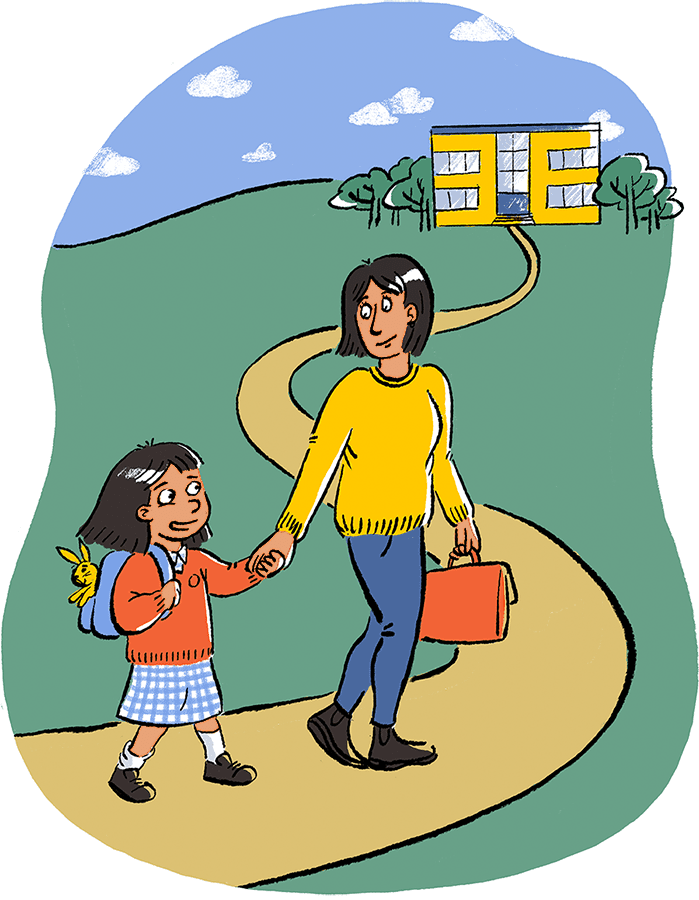
Cartoon of a parent and child on their way to school -
Cartoon of a parent and child -
Cartoon of a child singing using a wooden spoon as a pretend microphone -
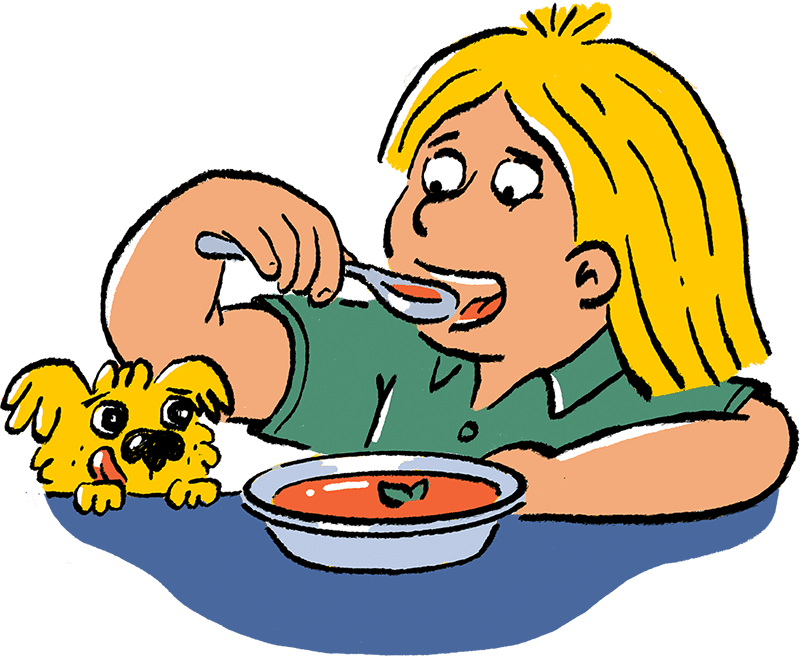
Cartoon of a child eating soup while a small dog watches -
Cartoon of a child and cat building blocks -
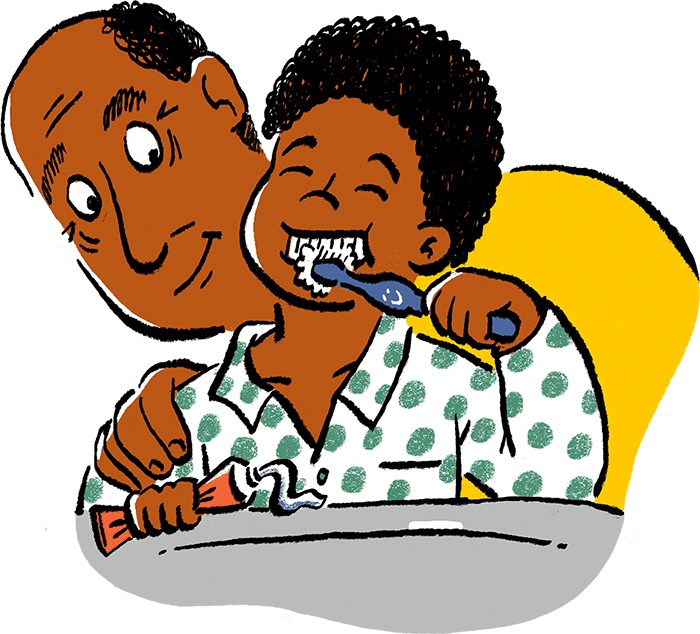
Cartoon of a child brushing teeth -
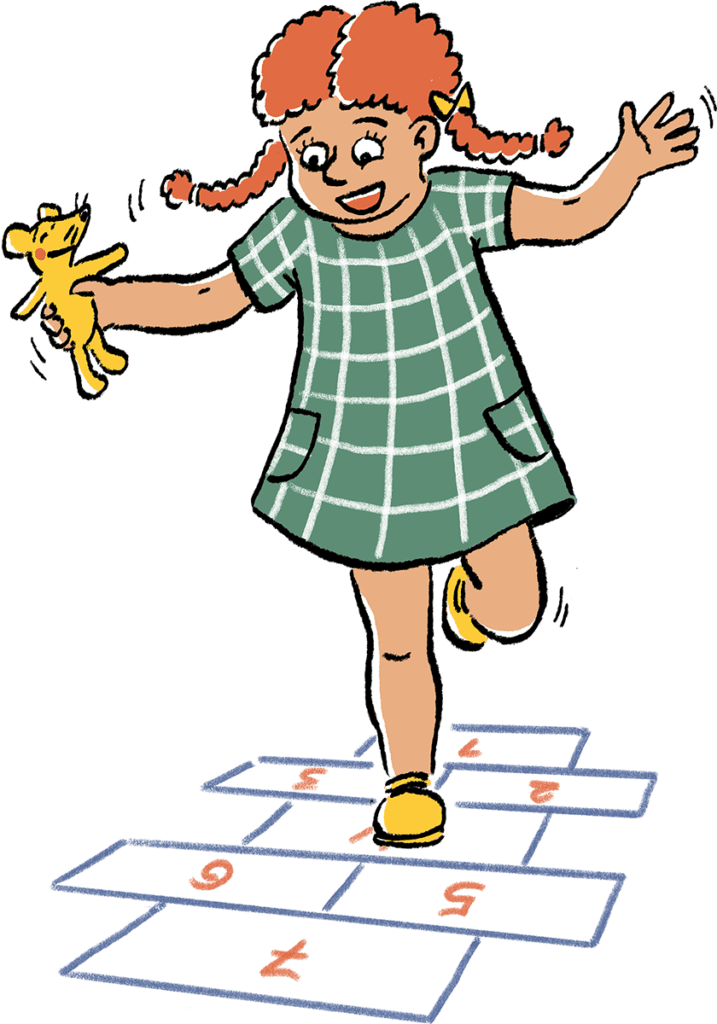
Cartoon of a child holding a toy mouse playing hopscotch -
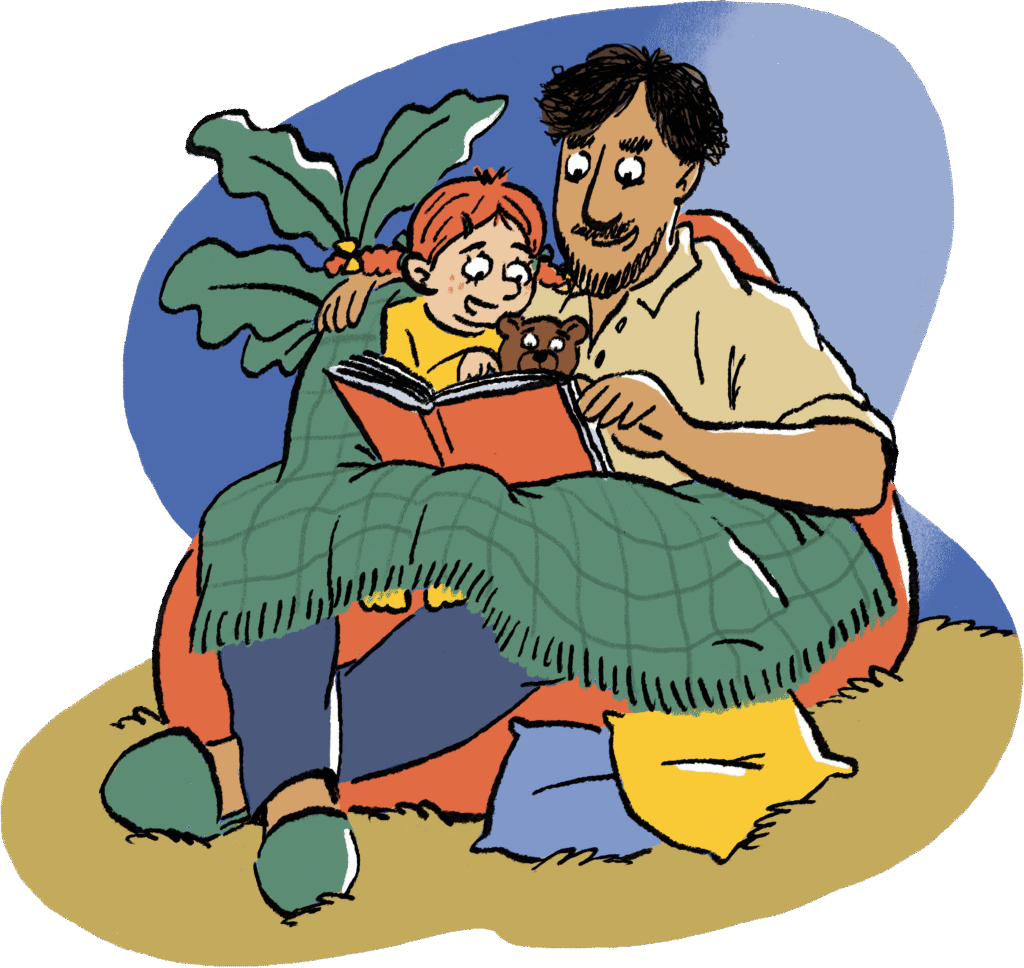
Child and parent reading together -
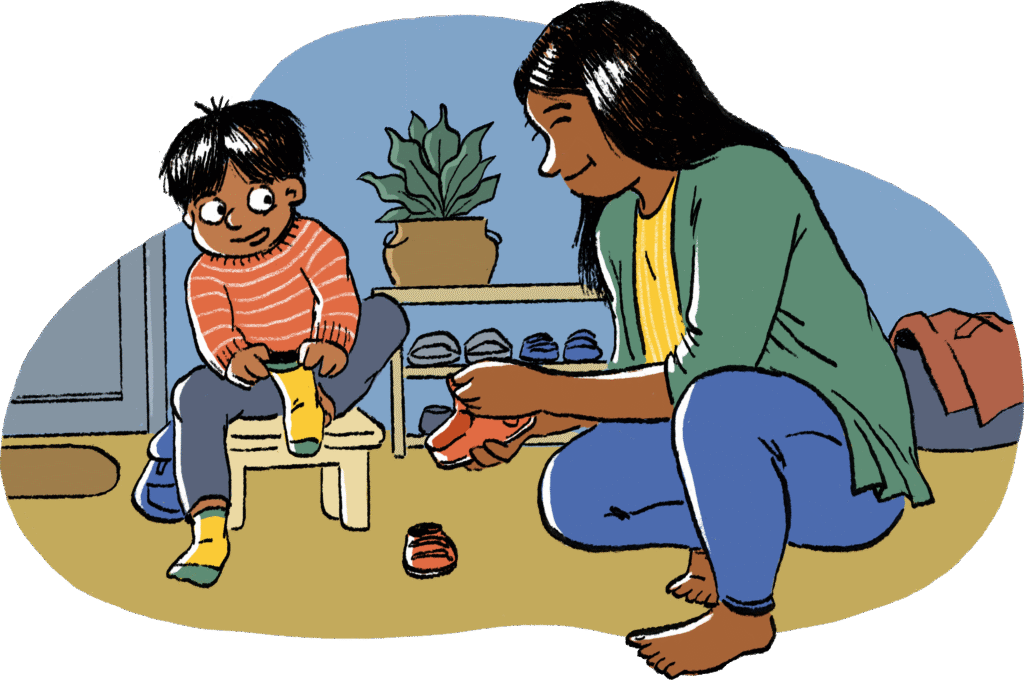
Child putting on their socks with parent supporting them


Free marketing assets
The Starting Reception A5 flyer
An editable Starting Reception poster
A QR code and template copy for emails and webpages
Starting Reception social media assets
Download the Starting Reception social media assets. The document also comes with instructions.
How to share Starting Reception with families
For nurseries, pre-schools, childminders and other early years settings
- Share Rozpoczęcie nauki w Reception(opens in new tab) with families on your website, in emails, newsletters and on social media. National offer day in April each year is a great opportunity to promote Starting Reception.
- Display our Starting Reception poster(opens in new tab) in your setting or create your own using our ready-made QR code.
- Print the definition (you can even add your own logo) and hand out copies to families during transition meetings and/or when children first join the pre-school room.
- Watch the 60-minute webinar(opens in new tab) and discover top tips to help strengthen your school readiness.
For schools
- Link to Rozpoczęcie nauki w Reception on your school website (e.g. on your admissions page).
- Include a link to Rozpoczęcie nauki w Reception in email communications to new families and on your social media channels.
- Print the definition (you can even add your own logo) and hand out copies to families on open days, during welcome evenings, transition visits etc...
- Display our Starting Reception poster in your school or create your own using our ready-made QR code.
- Discuss Starting Reception with feeder nurseries to align expectations and to increase awareness of any families who may be at risk and need extra support.
- Watch the 60-minute webinar and discover top tips to help strengthen your school readiness.
For local authorities
- Share Rozpoczęcie nauki w Reception with colleagues – health, education, social care, libraries...everyone has a role to play in helping to set clear expectations to families.
- Share Rozpoczęcie nauki w Reception with schools and early years settings by email and in meetings.
- Include a link to Rozpoczęcie nauki w Reception on the admissions pages of your website and in admissions emails.
- Print the definition (you can even add your own logo) and make copies available through schools, early years settings, family hubs, GPs and health visiting teams.
- Promote Rozpoczęcie nauki w Reception on your social media channels.
- Watch the 60-minute webinar and discover top tips to help strengthen your school readiness.
For libraries
- Guidance(opens in new tab) for libraries using the Starting Reception Definition.

Guidance on setting clear expectations with parents
For practitioners in early years settings
For educators in schools
Bonus Starting Reception resources to share with families
Activity Guide
Fun activity ideas to try at home to get your child ready for school.
Things I'm learning to do
Use the Starting Reception Things I'm learning to do template to encourage your child's efforts when practising the Starting Reception skills at home.
Examples of practice
Local Authorities
Find out more about how local authorities like Doncaster, Lincolnshire and Newcastle are using the Starting Reception definition here.
Schools
Find out more about how schools in Kemnal and Oasis Multi Academy Trusts are using the Starting Reception definition here.
Nurseries
Find out more about how nurseries like Ark Start are using the Starting Reception definition here.